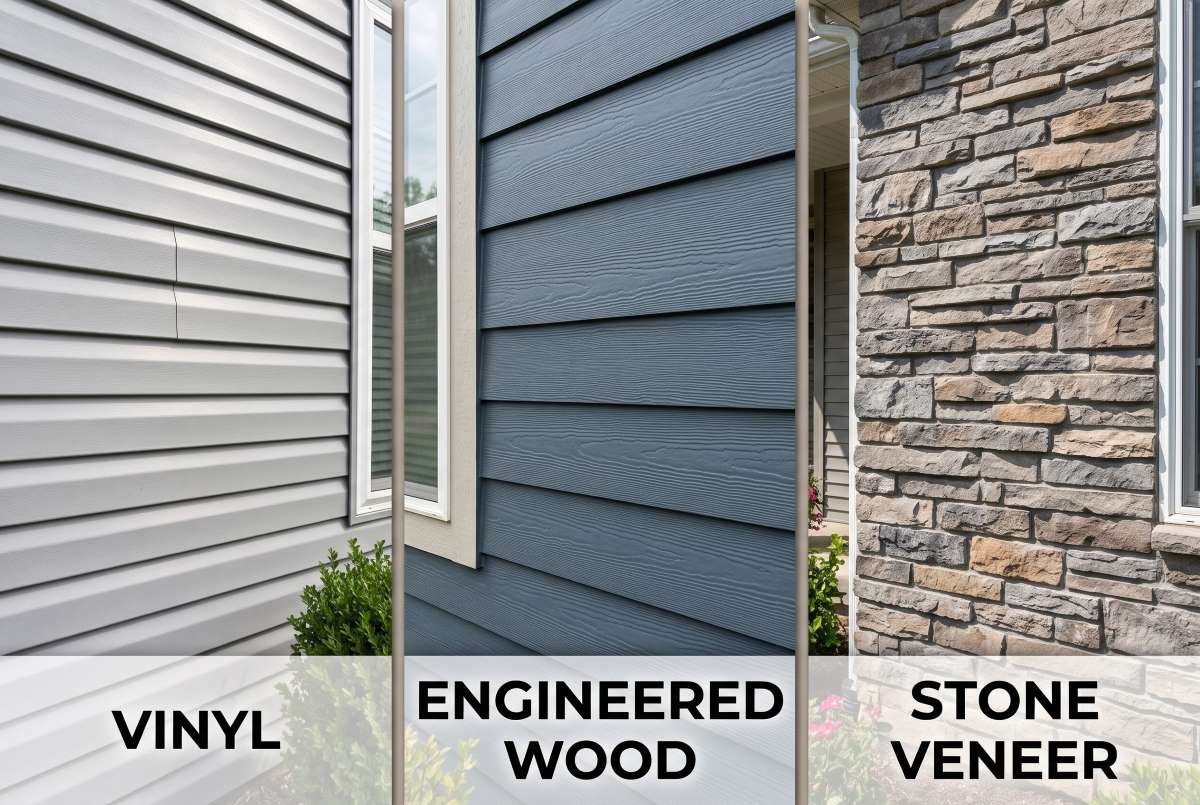
Your siding is your home's first line of defense against the weather. In Upstate New York, that weather can be rough. Long winters, heavy lake-effect snow, ice storms, and strong summer thunderstorms all test what is on the outside of your house.
At Comfort Windows, we help homeowners across Upstate New York choose exterior products that can handle our climate. This guide compares four popular siding types: vinyl, engineered wood, stone-look panels, and fiberglass-reinforced composite. You will learn how each one holds up to winter weather and storms, with tables to help you compare them side by side.
The Weather Your Siding Faces
Upstate New York has some of the toughest weather in the country for home exteriors. Here are the main threats your siding needs to handle:
- Freeze-thaw cycles: Temperatures often swing above and below freezing, sometimes in a single day. Water that seeps into small cracks freezes, expands, and makes the cracks bigger over time.
- Extreme cold: Some materials become stiff and brittle in deep cold. A hit that would do nothing in July can crack a panel in January.
- Lake-effect snow and ice: Areas near Lake Erie and Lake Ontario can get several feet of snow from a single storm. Snow piled against walls keeps siding wet for weeks.
- High winds: Winter storms and summer thunderstorms bring strong gusts that can loosen or tear off siding.
- Hail and flying debris: Hail, falling ice, and wind-blown branches can dent, crack, or puncture weaker materials.
A good siding choice should handle all of these, not just one or two.
Vinyl Siding: Affordable and Low Maintenance
Vinyl siding is the most common siding in America, and it is popular for good reasons. It costs less than most other options, never needs paint, and does not rot. Water cannot soak into vinyl, so freeze-thaw cycles do not damage the material itself.
Cold weather is vinyl's biggest weakness. Vinyl gets stiff and more brittle as temperatures drop, so a hit from hail, ice, or a snowblower can crack a panel in winter. Vinyl also expands and contracts a lot as temperatures change, which is why it must be hung loosely. If it is installed poorly, panels can buckle in summer or pop loose in high winds.
Quality makes a big difference. Thicker vinyl and insulated vinyl (vinyl with a foam backing) resist dents and cracks better than thin, builder-grade panels. Wind ratings also vary from product to product, so ask to see the rating for the line you are considering.
Bottom line: Vinyl is a solid budget choice that handles moisture well, but it is the most likely of these four options to crack from impacts in cold weather.
Engineered Wood Siding: The Look of Wood, Built Tougher
Engineered wood siding is made from wood strands bound together with resins, waxes, and treatments that protect against moisture and insects. The result looks like real wood but resists rot and swelling much better than natural wood.
Because it is treated to keep water out, engineered wood holds up well to freeze-thaw cycles. It stays stable during big temperature swings and can be installed in cold weather without cracking. It is also tough against impacts. Quality engineered wood generally resists dents and cracks from hail and flying debris better than vinyl, and many products are rated for very high winds.
The main trade-off is upkeep. Because it is a wood product, engineered wood depends on its paint and proper installation to keep water out. It needs repainting over time, and it must be kept clear of the ground and roof surfaces where snow and water collect.
Bottom line: A strong all-around choice for Upstate winters and storms, with a warm wood look, as long as you keep up with painting.
Stone-Look Siding: Classic Style Without the Mortar
Real stone is beautiful, but it is heavy, expensive, and needs mortar that can crack in freeze-thaw weather. Stone-look siding panels give you the look of stone in lightweight panels that screw or nail to the wall. No mortar is needed, so there are no mortar joints to crack. These panels are often used as an accent on the lower part of a wall, around an entry, or paired with other siding.
There are two main kinds, and the difference matters in our climate.
Composite stone panels are molded from plastic and minerals, not real stone. The material does not absorb moisture, so many of these panels can be installed right down to ground level or up to a roofline, where snow piles up. They can often be installed in any weather and are very resistant to hail and impacts.
Manufactured stone veneer panels are cast from molds of real stones, so they look very natural. Better systems include a built-in rainscreen that gives water a path to drain away, which helps prevent hidden moisture damage and mold. They clean up with soapy water and never need tuckpointing or recaulking like real stone.
Bottom line: Both offer the look of stone with far less risk of freeze-thaw mortar damage than real masonry. Composite stone stands out for moisture and hail resistance near the ground, while manufactured stone veneer stands out for its realistic look.
Composite Siding: Wood Look, No Painting
Fiberglass-reinforced composite is a newer type of siding. It pairs a tough polymer face, strengthened with glass fibers, with a rigid foam backing. The result looks like painted wood planks but never needs paint, caulking at the joints, or sealing.
Composite siding was built with tough weather in mind. It resists becoming brittle in cold weather, which is a common problem for regular vinyl. A reinforced nailing strip helps it stand up to very high winds. The foam backing makes the panels stiffer and adds a layer of insulation. The material does not absorb moisture, so freeze-thaw cycles are less of a concern.
Because composite siding is newer to the market, it has a shorter real-world track record than vinyl or engineered wood.
Bottom line: A strong choice for homeowners who want a wood look with almost no upkeep, plus extra insulation for cold Upstate winters.
Side-by-Side Comparison
These tables sum up how each siding type handles Upstate New York weather. Ratings are general and based on typical products in each category. Real results also depend on the specific product line and installation quality.
Winter Weather Performance
| Siding | Freeze-Thaw Resistance | Extreme Cold | Snow Piled Against Walls | Cold-Weather Installation |
|---|---|---|---|---|
| Vinyl | Good: does not absorb water | Fair: gets brittle in deep cold | Good | Possible, but panels can crack when handled in the cold |
| Engineered wood | Very good: treated to resist water | Very good: stays stable in temperature swings | Fair: needs clearance from snow and ground | Yes |
| Composite stone panels | Excellent: does not absorb moisture | Very good | Excellent: often approved for ground and roofline contact | Often, in any weather |
| Manufactured stone veneer panels | Very good: no mortar joints to crack | Very good | Good: rainscreen helps water drain | Check with installer |
| Fiberglass-reinforced composite | Excellent: does not absorb moisture | Very good: resists cold-weather brittleness | Good | Check with installer |
Storm Performance
| Siding | Wind Resistance | Hail and Impact Resistance | Moisture Protection in Heavy Rain |
|---|---|---|---|
| Vinyl | Varies; look for high-wind rated lines | Fair: can crack or dent, worse in cold | Good, if installed correctly |
| Engineered wood | Very good | Very good | Good, if paint and seams are kept up |
| Composite stone panels | Good | Excellent | Excellent |
| Manufactured stone veneer panels | Good | Good | Very good: rainscreen helps drainage |
| Fiberglass-reinforced composite | Very good: reinforced nailing strip | Good: stiffened by foam backing | Excellent |
Upkeep and Cost
| Siding | Needs Painting? | Added Insulation | Typical Relative Cost |
|---|---|---|---|
| Vinyl | No | Only with insulated vinyl | Lowest |
| Engineered wood | Yes, over time | No | Moderate |
| Composite stone panels | No | No | Higher |
| Manufactured stone veneer panels | No | No | Higher |
| Fiberglass-reinforced composite | No | Yes, from foam backing | Moderate to higher |
Which Siding Is Right for Your Home?
There is no single best siding for every house. The right choice depends on your budget, the look you want, and how much upkeep you are willing to do. Many homeowners also mix materials, such as stone-look panels on the lower wall with lap siding above.
| If Your Top Priority Is... | Consider |
|---|---|
| Lowest upfront cost | Vinyl (choose a thicker or insulated line) |
| Real wood look with strong storm protection | Engineered wood |
| Wood look with almost no maintenance | Fiberglass-reinforced composite |
| Stone look near the ground or roofline, where snow piles up | Composite stone panels |
| The most natural-looking stone accent | Manufactured stone veneer panels |
| Extra insulation for cold winters | Fiberglass-reinforced composite or insulated vinyl |
No matter which product you choose, proper installation matters just as much as the material. Good flashing, a weather-resistant barrier, and following the manufacturer's instructions keep water out and help your siding last.
The team at Comfort Windows has helped Upstate New York homeowners protect their homes from our tough weather for decades. Contact us to see samples, compare options for your home, and get a quote on siding built for Upstate winters.
Subscribe to the Comfort Windows & Doors Blog



Comments